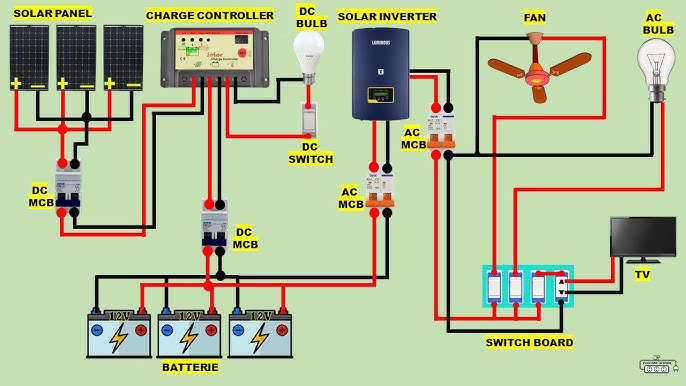
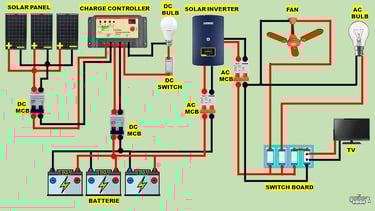
An off-grid solar system operates independently of the utility grid, utilizing solar panels, a charge controller, a battery bank, and an inverter to generate, store, and convert electricity for homes in remote areas or for energy autonomy. These systems provide 24/7 power without relying on the main grid, offering independence from outages and, in some cases, lower long-term costs, but require significant upfront investment in batteries.
Off grid solar system
Key Components & Functionality
Solar Panels: Convert sunlight into DC electricity.
Battery Bank: Stores energy for use at night or during cloudy weather, typically using lithium-ion (higher efficiency) or lead-acid (lower cost).
Off-Grid Inverter: Converts stored DC energy into AC for household appliances.
Charge Controller: Regulates voltage from panels to prevent battery overcharging.
Advantages
Energy Independence: No, or low, reliance on the utility grid, making it ideal for remote locations.
Power Security: Functions during grid outages, storms, or natural disasters.
Sustainability: Reduces carbon footprint and fossil fuel dependency.
Considerations
High Initial Cost: Batteries and infrastructure are expensive.
Storage Limitations: Requires careful capacity planning (sizing) to ensure power for 2–5 days without sunlight.
Maintenance: Battery banks, especially lead-acid, require maintenance and have limited lifespans.
Contact
Follow us on
© 2025. All rights reserved.
Connect
Reecard Industries Private Limited.
Beside Hotel JK Palace,
Pune- Nashik Highway, Vaki,
Chakan,Pune- 410501
Address
Mobile-
Email-
Website-
www.reecardindustries.com